Three manuscripts, from design to evidence
A personalized antigen-selection engine for pMHC-II tolerance in EoE; a target-and-binder brief on the CCL26 / POSTN effector axis; and a dual-arm de novo design campaign for esophageal cancer that shows the same engine generalizes to a second disease. All three are computational preprints (not peer reviewed), openly documented, with structures and data available to download.
A patient-specific antigen-selection engine for personalized pMHC-II tolerance therapy in eosinophilic esophagitis
Ruth-Anne Pai, PhD · immunologist and person living with EoE · produced with Claude Science (AI) support
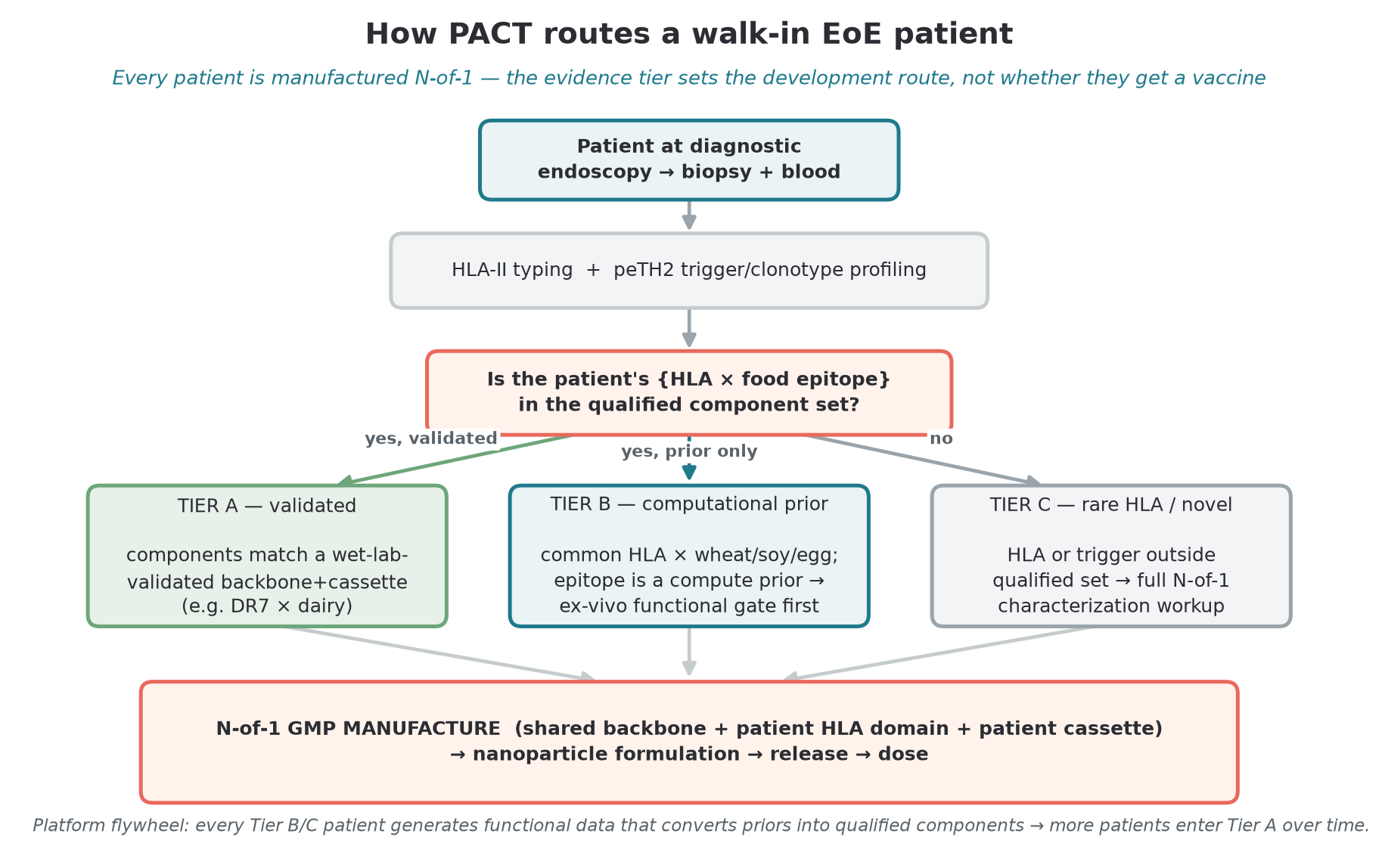
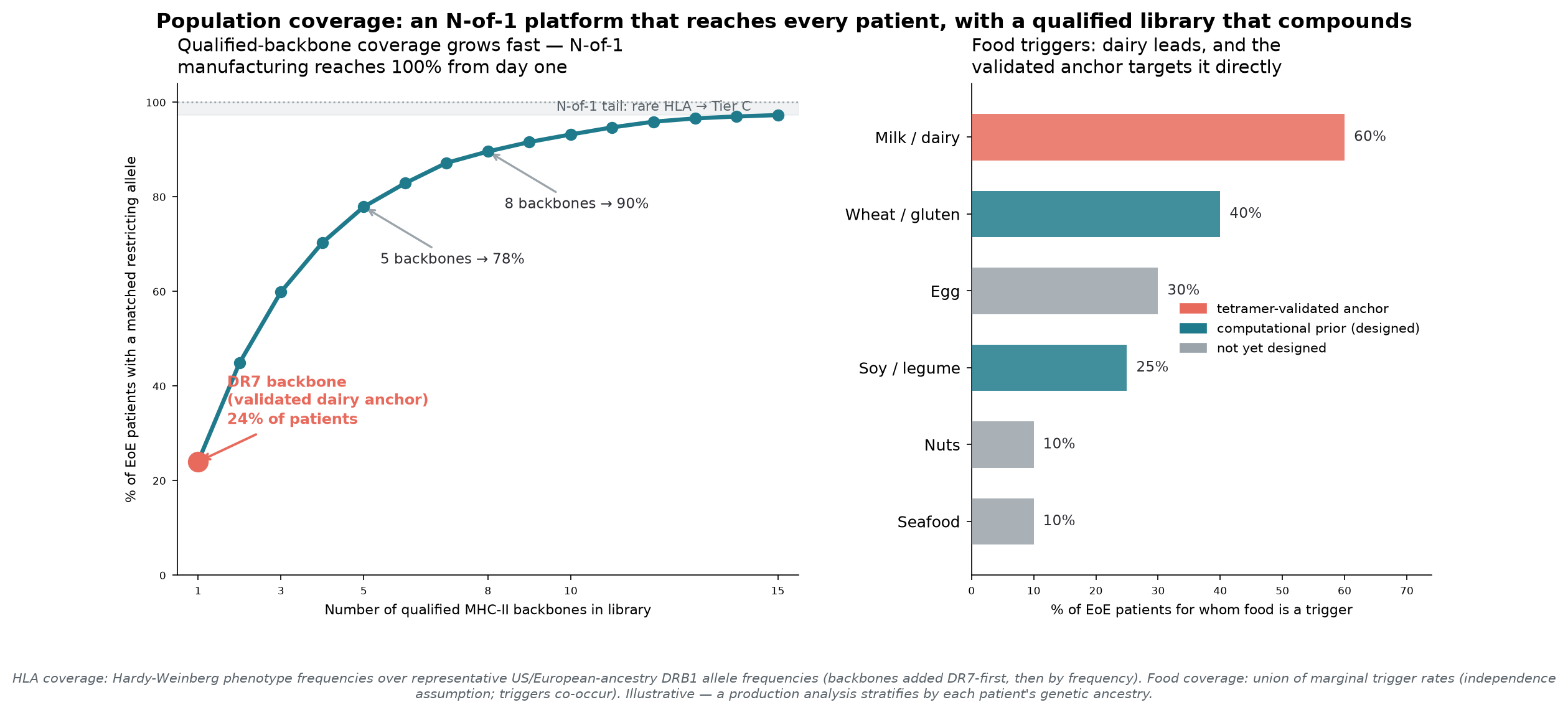
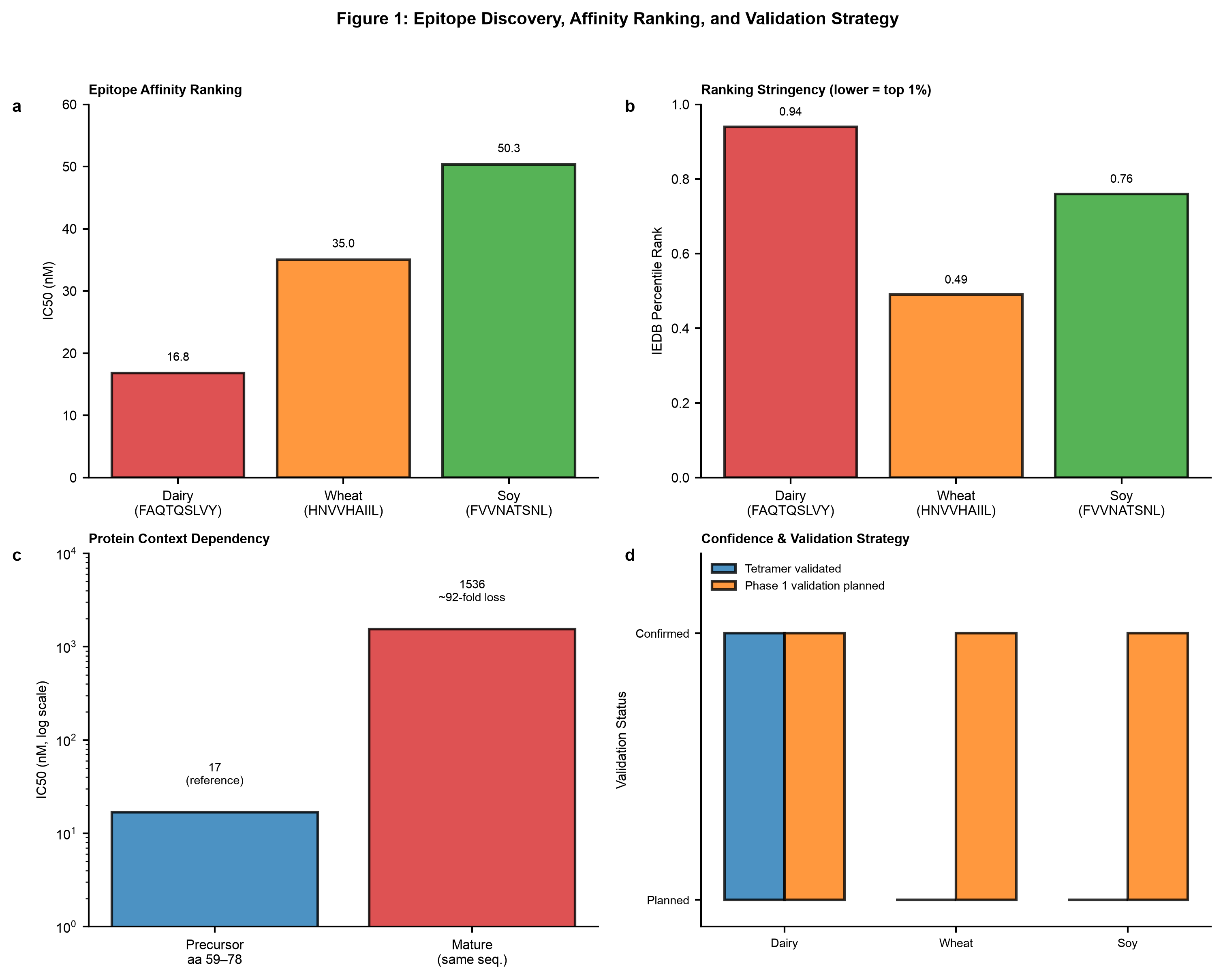
Rather than broadly suppressing the immune system, this work re-educates the specific food-reactive T-cell clones that drive EoE — and it computes which epitopes matter for a given person. Because presented-epitope load is strongly HLA-dependent, antigen priority is per-patient. The engine scans the dominant dairy, wheat, and soy allergens across common HLA-DRB1 alleles, then hands a folded, groove-validated lead to a tolerogenic nanoparticle (PACT: one shared backbone, a swappable peptide cassette).
Structural models
Three pMHC-II:peptide complexes were co-folded (ESMFold2-Fast, GPU) and inspected for canonical groove
geometry. Download the atomic coordinates below — .pdb files open in PyMOL, ChimeraX, or any
Mol* viewer.
| Complex | Peptide (15-mer) | ipTM | Structure |
|---|---|---|---|
| Dairy pMHC-II | KIHPFAQTQSLVYPF | 0.872 | dairy_pmhc.pdb |
| Wheat pMHC-II | IHNVVHAIILHQQQQ | 0.896 | wheat_pmhc.pdb |
| Soy pMHC-II | AYPFVVNATSNLNFL | 0.891 | soy_pmhc.pdb |
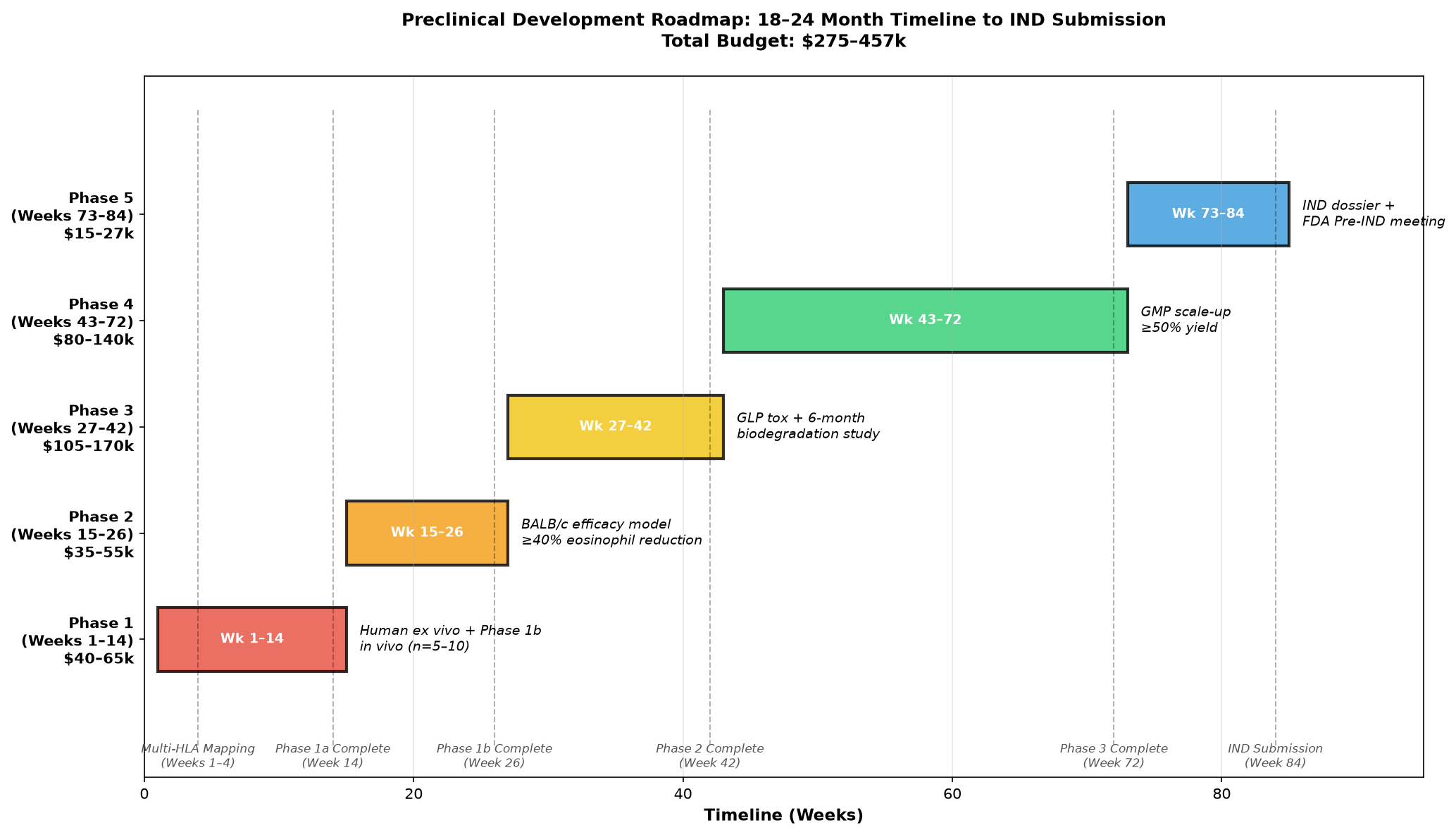
Preclinical roadmap
De novo design of neutralizing protein binders against CCL26 and POSTN, two convergent targets in EoE
Ruth-Anne Pai, PhD · immunologist and person living with EoE · produced with Claude Science (AI) support
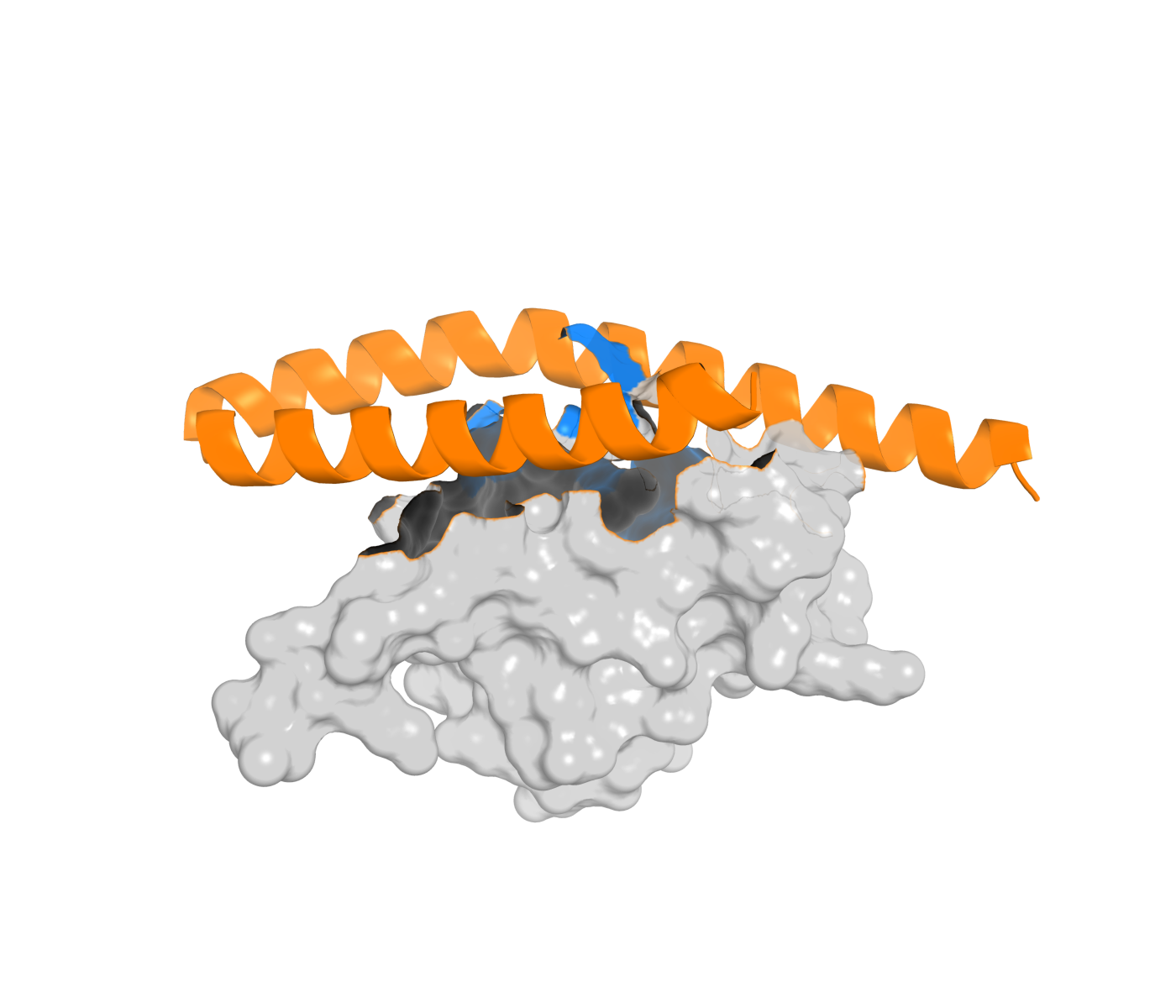
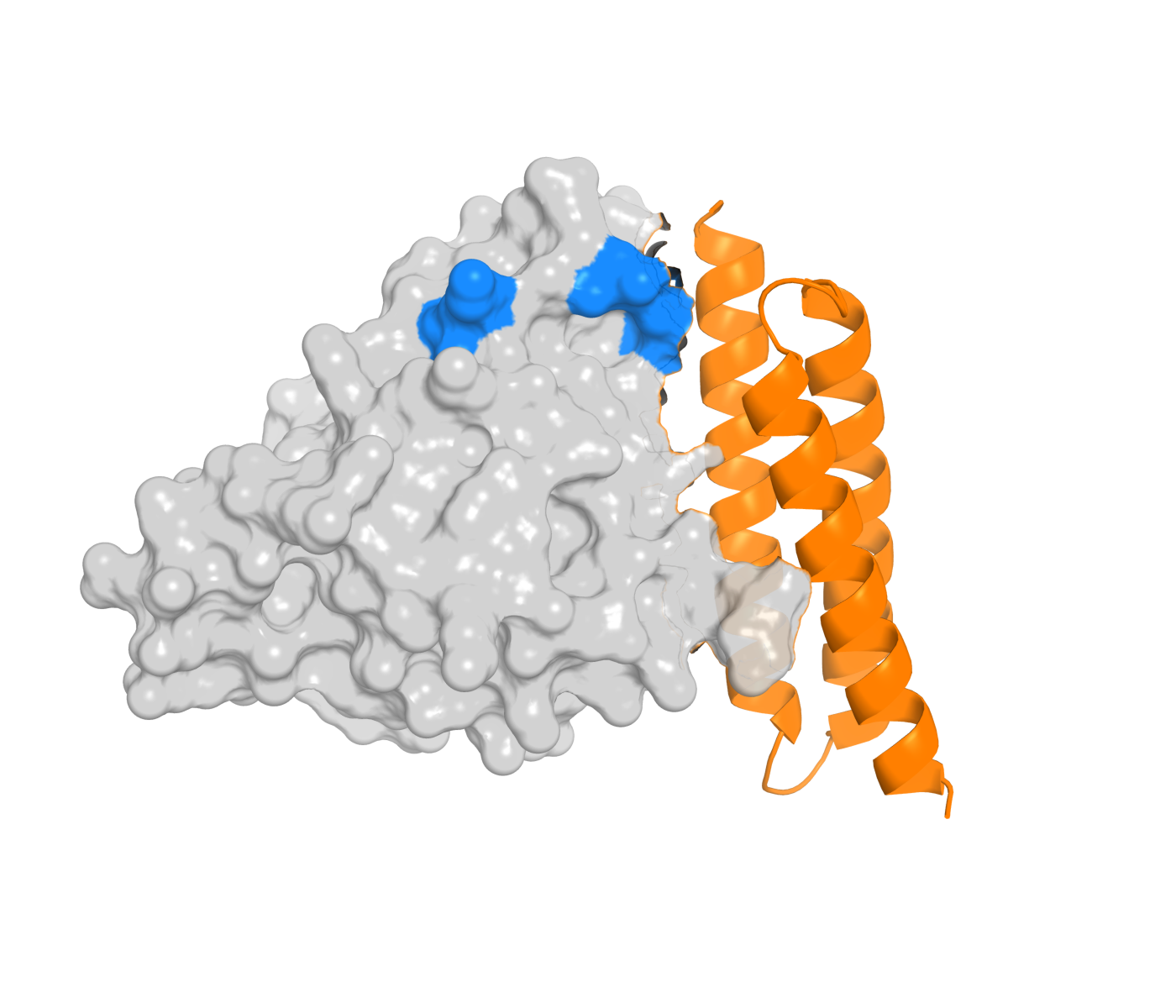
CCL26 and POSTN emerged from a nine-cohort transcriptomic meta-analysis as high-evidence, no-trial biology — the eosinophil-recruitment axis and the barrier-remodeling axis. From 80 RFdiffusion backbones → 1,920 SolubleMPNN sequences → 60 Boltz-2-assessed complexes, lead binders engage the intended functional epitopes: CCL26 ipTM 0.942 (4/5 hotspots, 1,220 Ų buried) and POSTN ipTM 0.901 (pLDDT 0.911, 3/4 hotspots).
Design rationale
Two routes for CCL26
A neutralizing anti-CCL26 IgG1 must occlude the N-loop / 40s-loop docking surface to block CCR3 site-1 engagement — a high-affinity (KD < 1 nM) requirement for the small, 71-aa antigen. Alternatively, a small-molecule CCR3 antagonist targets the invariant receptor and captures the other eotaxins (CCL11/CCL24) on the same axis for a broader anti-eosinophil effect.
ESM-guided escape hardening
The sole ESM escape-risk position in the CCL26 epitope (H39) sits inside the N-loop docking surface — so the design co-engages the disulfide-rigid, conserved 40s loop rather than relying on H39. For the IL1RL1 interface, CDRs are steered toward conserved aromatic hotspots (Y119 / F245) and away from the escape-prone rim.
Why it differentiates
Effector-specific eosinophil-recruitment blockade — narrower and more targeted than dupilumab's broad Th2 blockade, and universal across EoE endotypes.
The honest result: a negative control that matters
We ran 36 scrambled and random decoy complexes through the same pipeline. 92–100% of decoys cleared the same ipTM/pLDDT gate that 59 of 60 designs cleared — so a high structural pass rate is close to the null and, on its own, does not demonstrate a real binder. What separates the leads is focal, on-epitope engagement, not the confidence score. Claude Science flagged this over-claim during the work; reporting it is part of the point.
Steering into competitive whitespace: a public-data campaign nominates GUCY2C and DKK1 and delivers de novo binder leads across the esophageal-adenocarcinoma trajectory
Ruth-Anne Pai, PhD · immunologist and person living with EoE · produced with Claude Science (AI) support
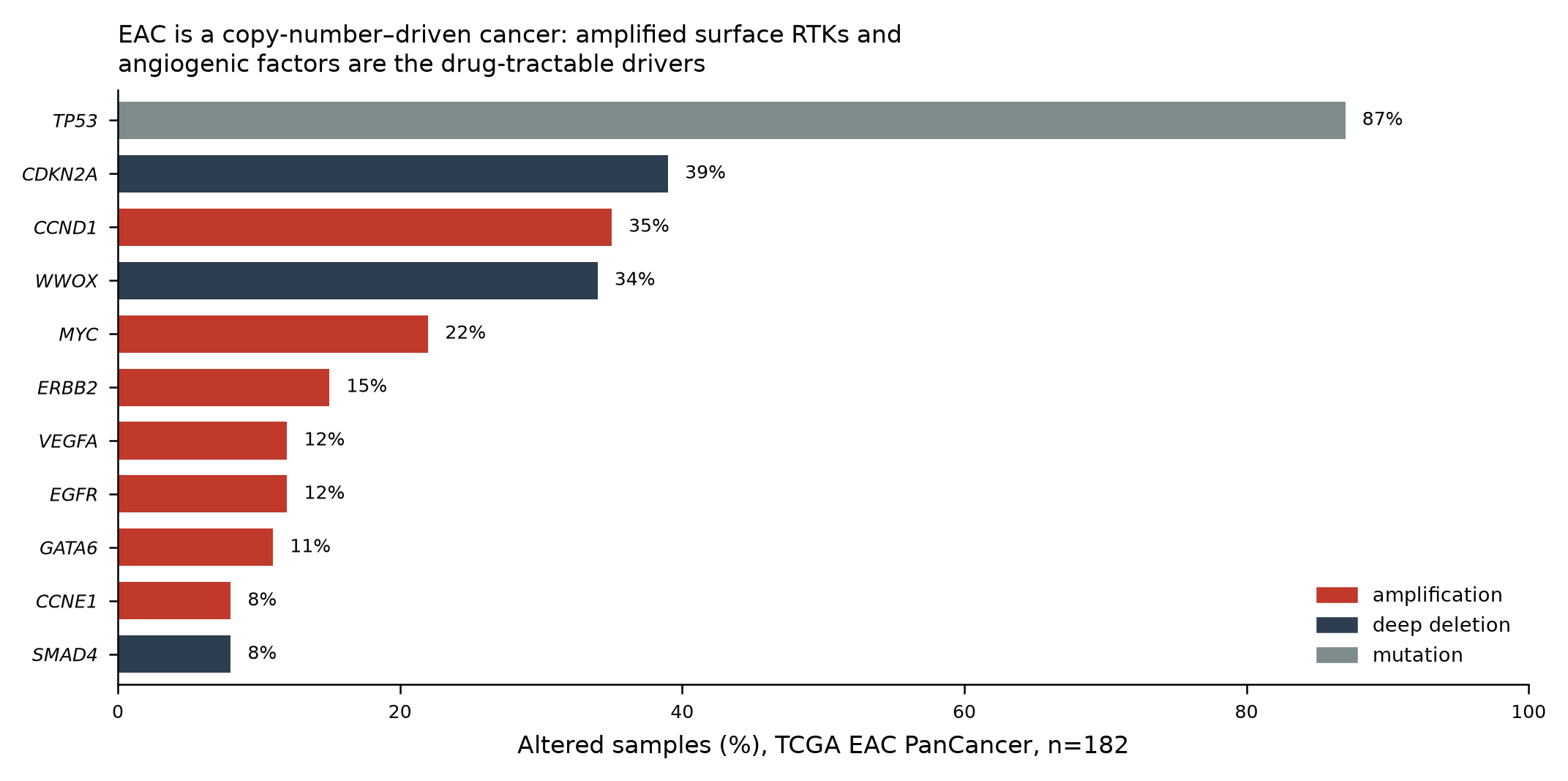
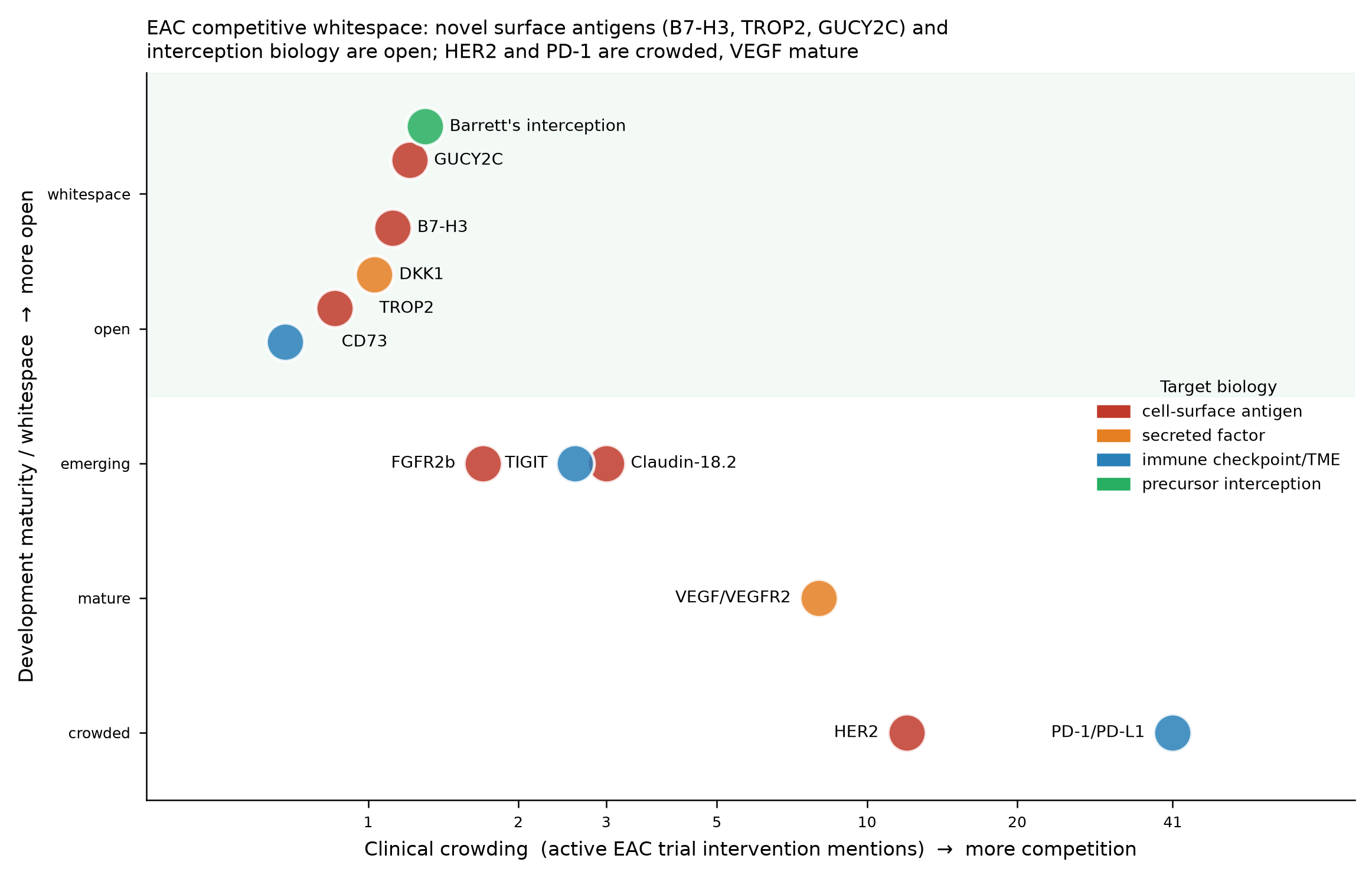
The strongest test of a platform is whether it works on a disease it wasn't built for. I pointed the same engine at esophageal adenocarcinoma (EAC) — a copy-number-driven cancer at the end of the Barrett's trajectory — and asked it to find tractable targets in competitive whitespace, then design binders. It nominated a dual-arm program: GUCY2C for a T-cell-engager treatment arm, and DKK1 for a neutralizing-trap interception arm in high-risk Barrett's.
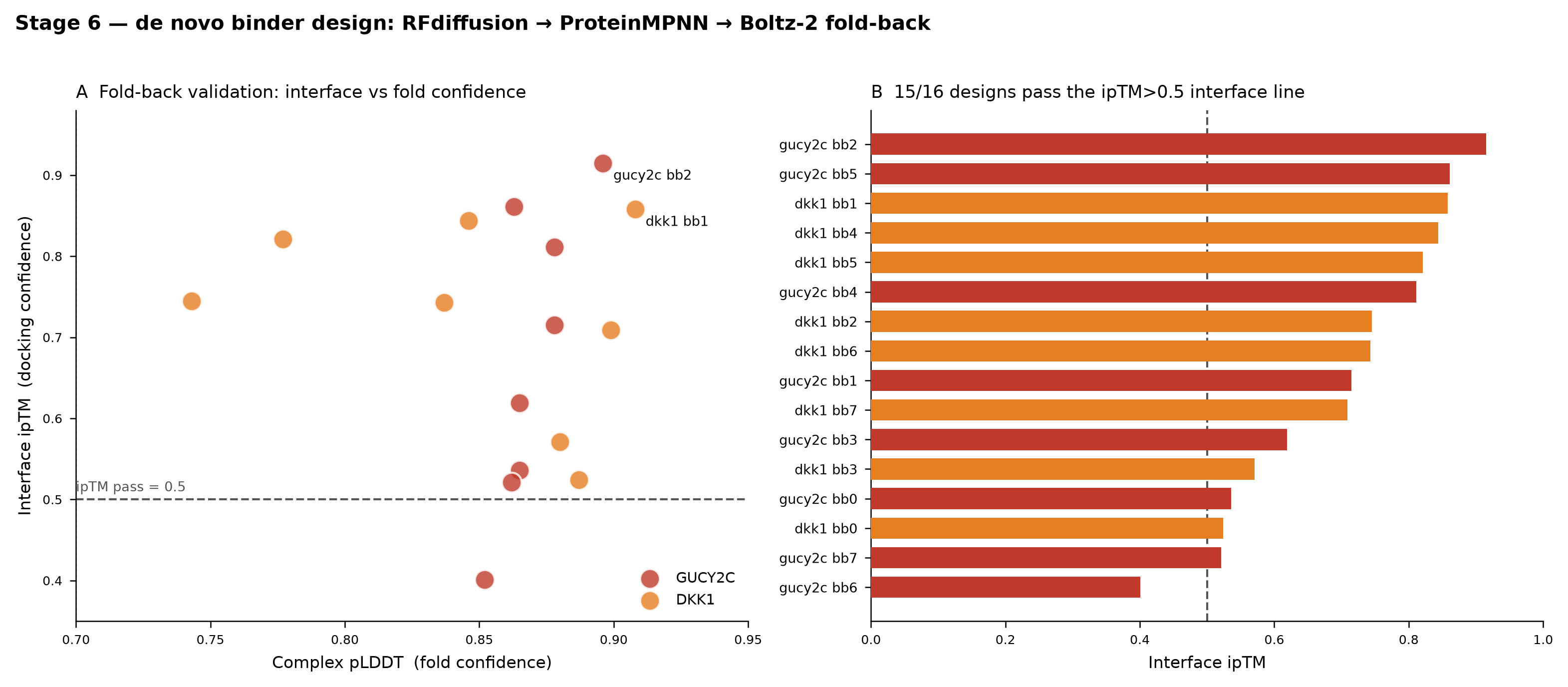
gucy2c_bb2 (ipTM 0.915; flagged for a high-alanine developability liability)
and DKK1 dkk1_bb1 (ipTM 0.858, pLDDT 0.908 — the cleanest design in the set). Reported as
pilot-scale in-silico leads: ipTM is a docking-confidence proxy, not a measured affinity.Treatment arm — GUCY2C
A gut-restricted surface antigen (GTEx: ~85% GI-restricted expression) nominated #1 in 80.7% of 20,000 weight-perturbation draws, with CDH17 as a backup. Designed for a T-cell-engager format. Open question: the normal-gut therapeutic window.
Interception arm — DKK1
A secreted Wnt modulator targeted with a neutralizing trap for high-risk Barrett's — interception before invasive cancer. Open question: a dysplasia-regression surrogate endpoint that a trial could actually read out.
Program verdict: TRACTABLE (0.87). The two make-or-break questions above are named as open, not claimed. This is a design-stage dossier, not a clinical result.