Programming T‑cell tolerance, one patient at a time.
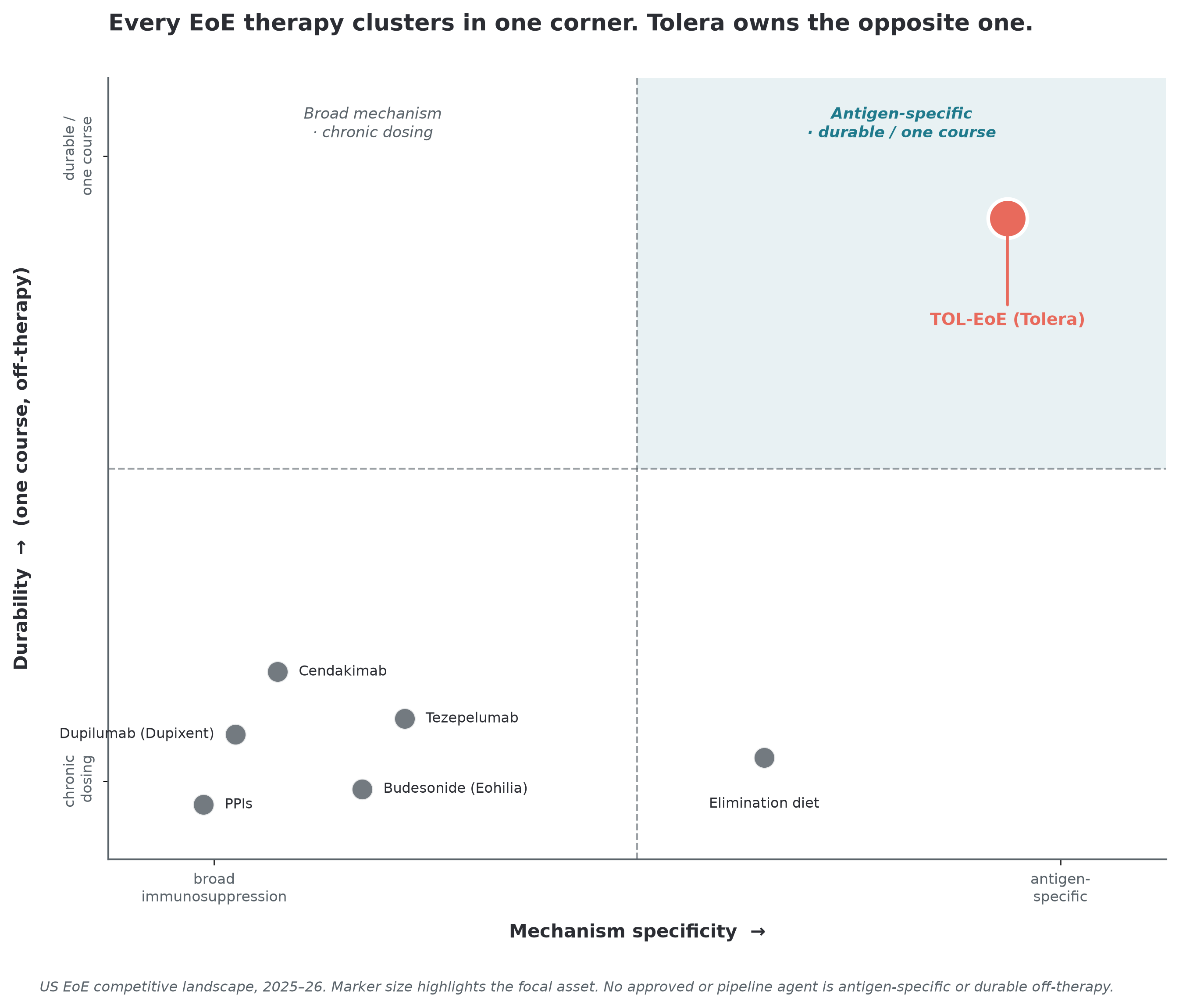
A citizen-scientist's roadmap for a personalized pMHC-II tolerance vaccine in eosinophilic esophagitis — from AI/ML design to first-in-patient. EoE is, at its root, antigen-specific: a food peptide presented on an MHC-II molecule to a pathogenic T-cell clone. Yet every approved and pipeline therapy is a broad, chronically-dosed symptom suppressor. Project Tolera maps the path to a one-course therapy that reprograms the pathogenic clone toward tolerance and retires it.
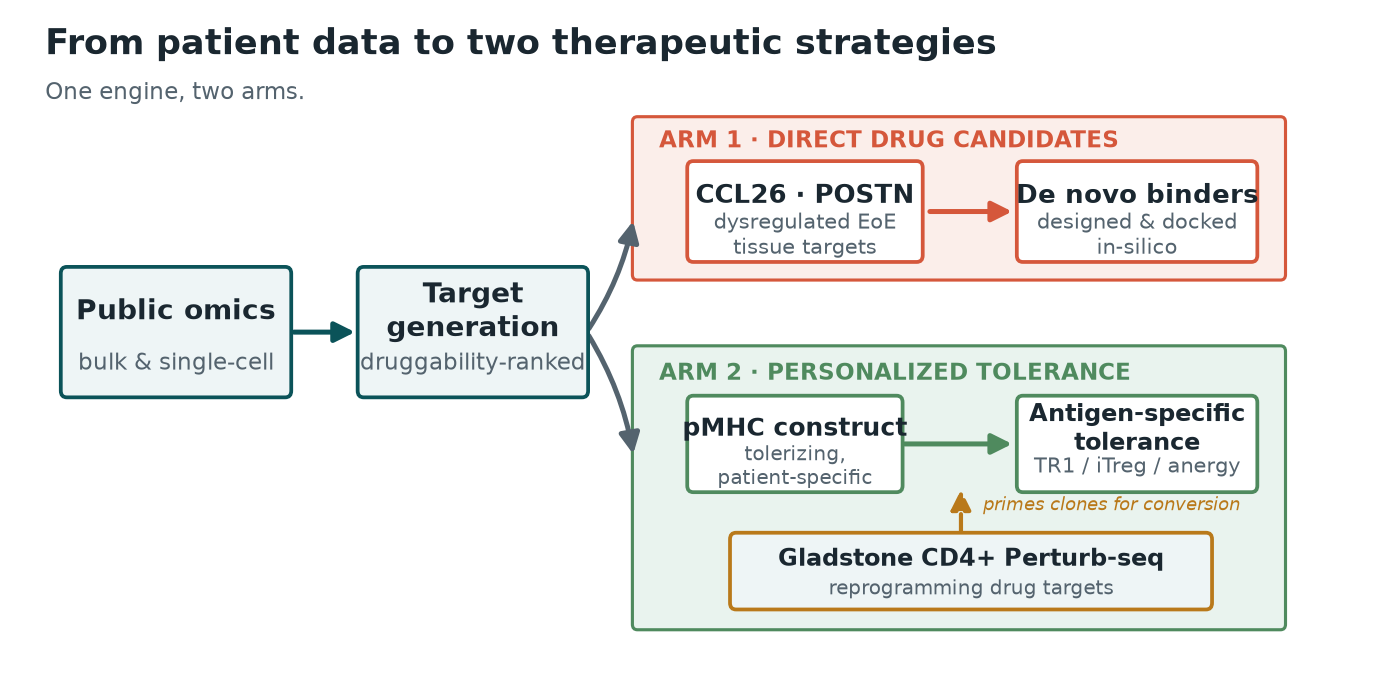
Two ways to reprogram the pathogenic T cell
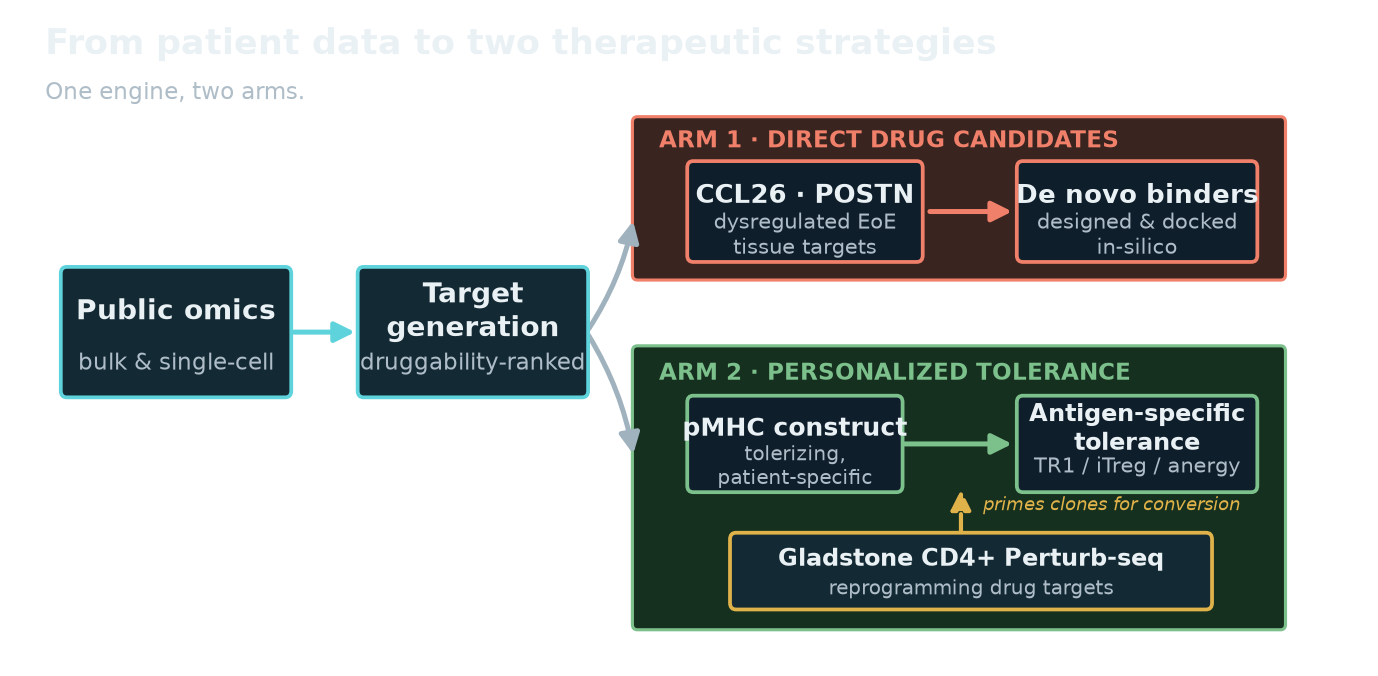
Tolera's reprogramming work runs on two complementary axes. The lead program engineers a personalized pMHC-II construct that re-educates the food-specific T-cell clone toward tolerance based purely on its TCR — regardless of the cell's activation state. In parallel, we mined a genome-scale CD4+ T-cell CRISPRi Perturb-seq resource to identify drug targets that reprogram T-cell state: knockdowns that dampen pathogenic Th2 output (lowering IL-13/IL-5/IL-4, the upstream drivers of the CCL26/POSTN tissue axis) and co-targets that improve amenability to pMHC-induced tolerance, making committed effector clones more convertible to a regulatory fate.
Perturb-seq resource: genome-scale CRISPRi in primary human CD4+ T cells, from the laboratories of Alex Marson (Gladstone Institutes / UCSF) and his collaborator Jonathan Pritchard (Stanford University), made publicly available through the CZI Virtual Cells Platform.
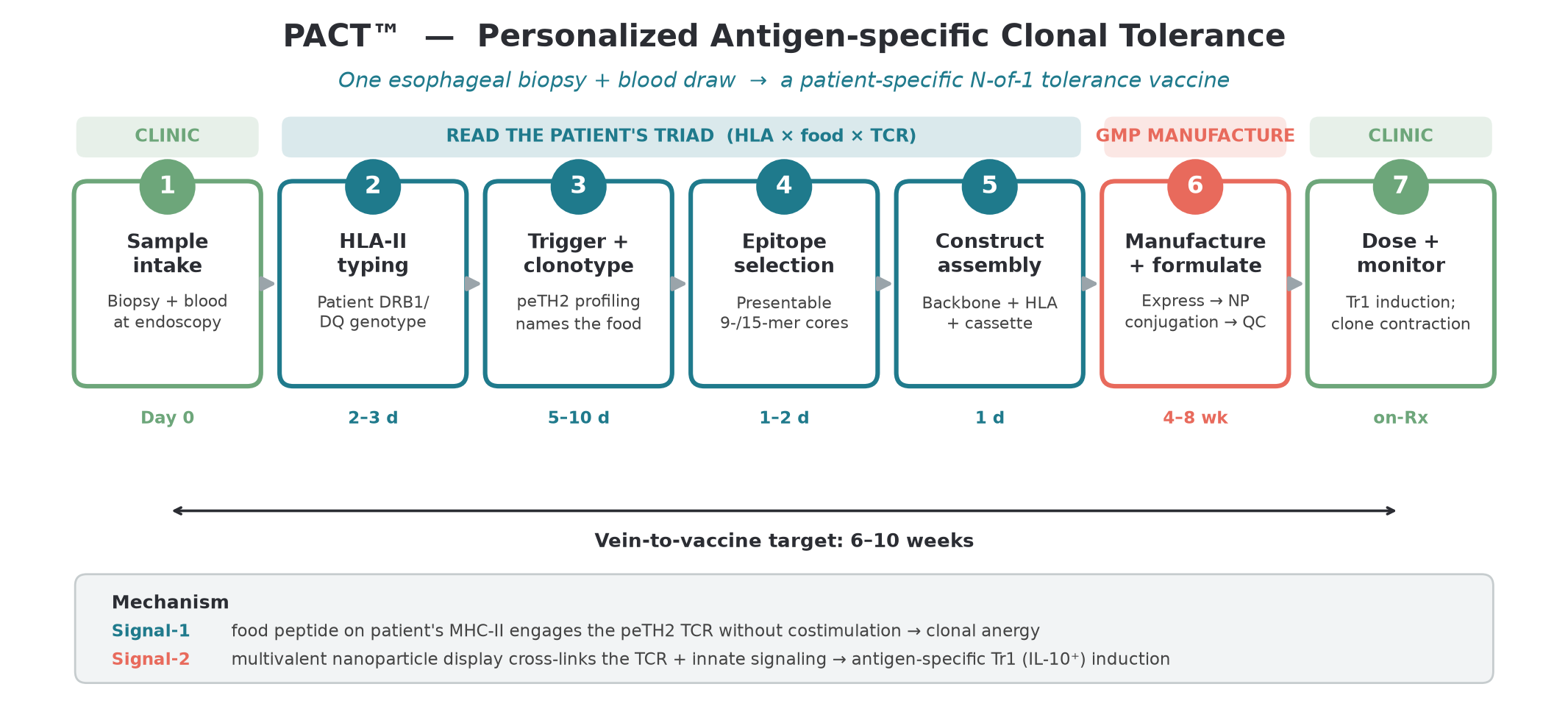
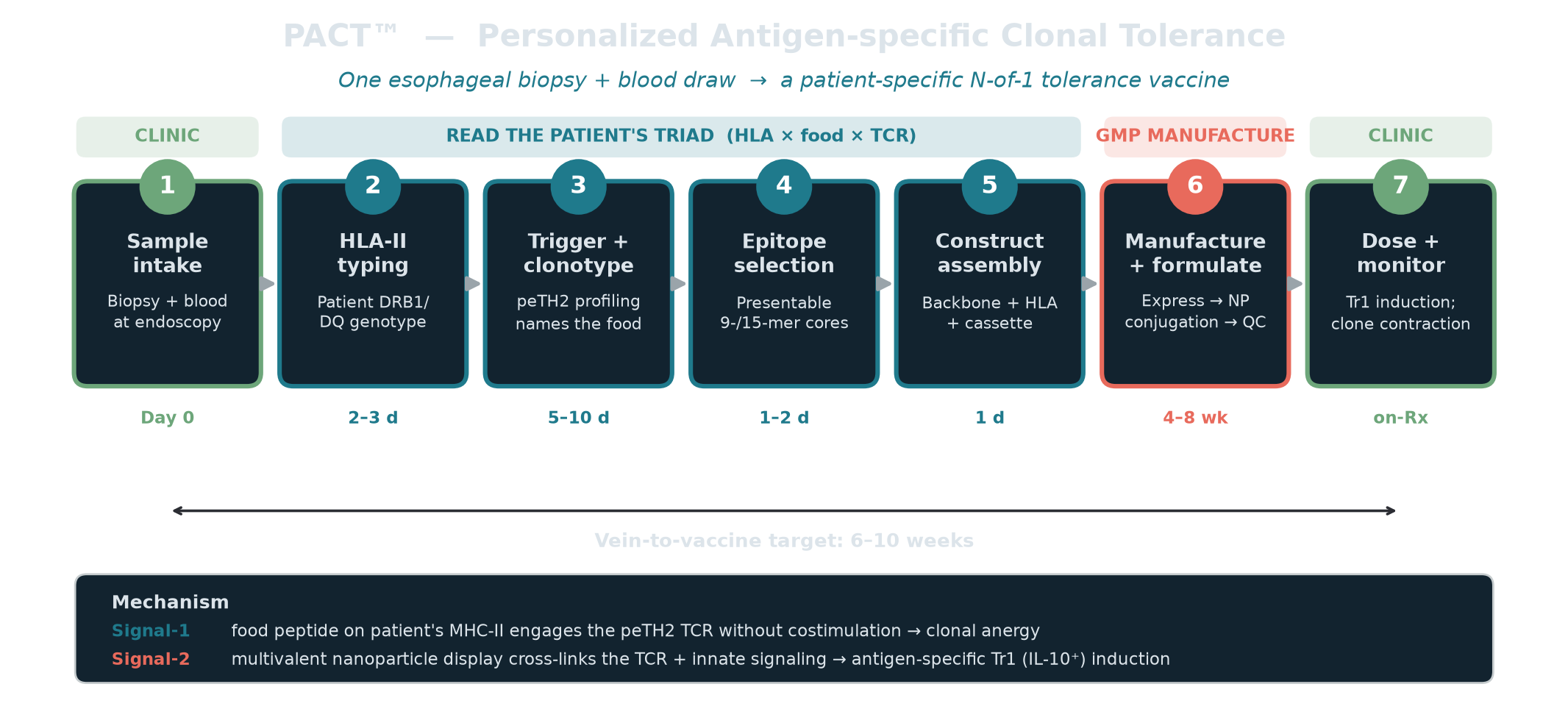
PACT™ — the N-of-1 manufacturing thesis
Personalized therapy is only investable if manufacturing is tractable. PACT uses a shared, GPU-validated MHC-II backbone with a swappable peptide cassette — only the peptide changes per patient, so the expensive, regulated components are standardized and validated once. Vein-to-vaccine target: 6–10 weeks.
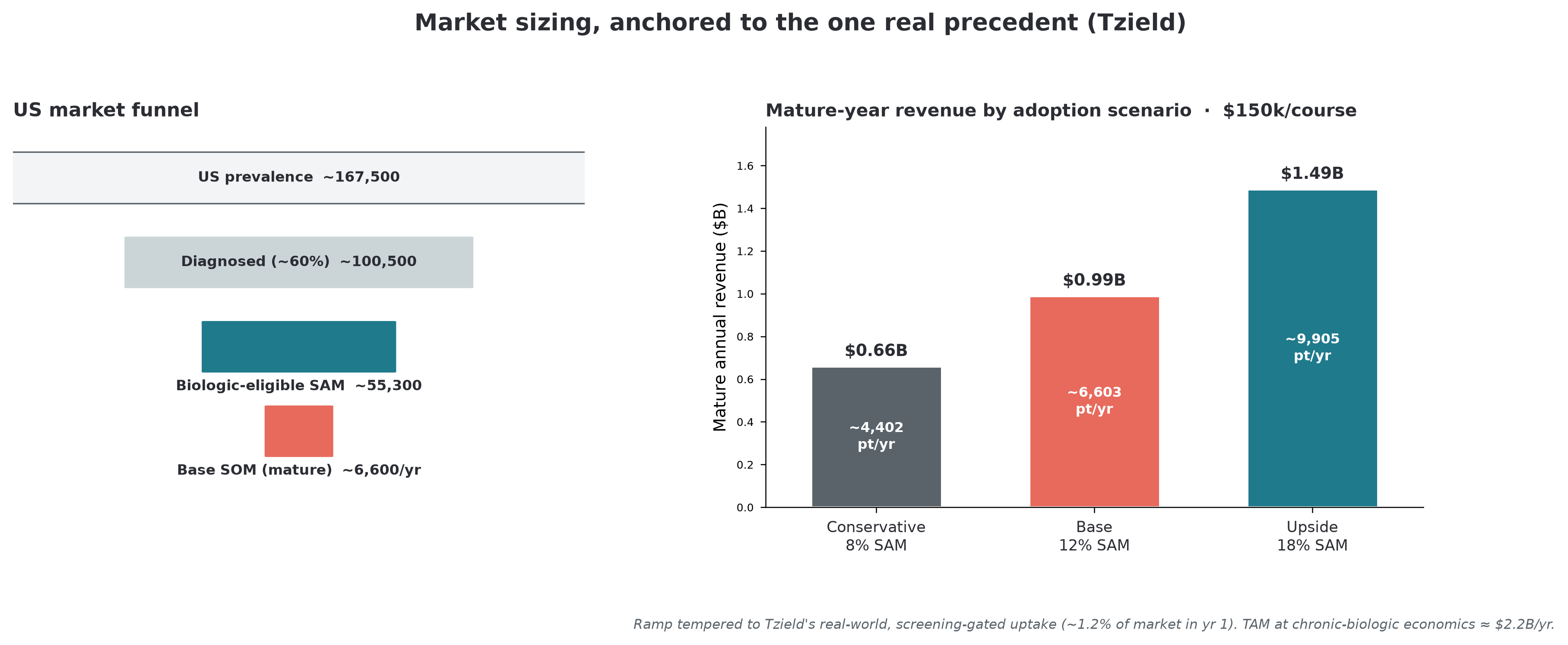
A ~$2.2B unmet need, sized against a real precedent
| Layer | Definition | Patients (US) |
|---|---|---|
| Prevalence | US EoE (~1 in 2,000) | ~167,500 |
| Diagnosed | Clinically diagnosed (~60%) | ~100,500 |
| SAM | Biologic-eligible (moderate–severe / failing conventional care) | ~55,300 |
| SOM (mature) | Realistic annual serviceable share (~12% of SAM) | ~6,600 / yr |
The voice-first thesis
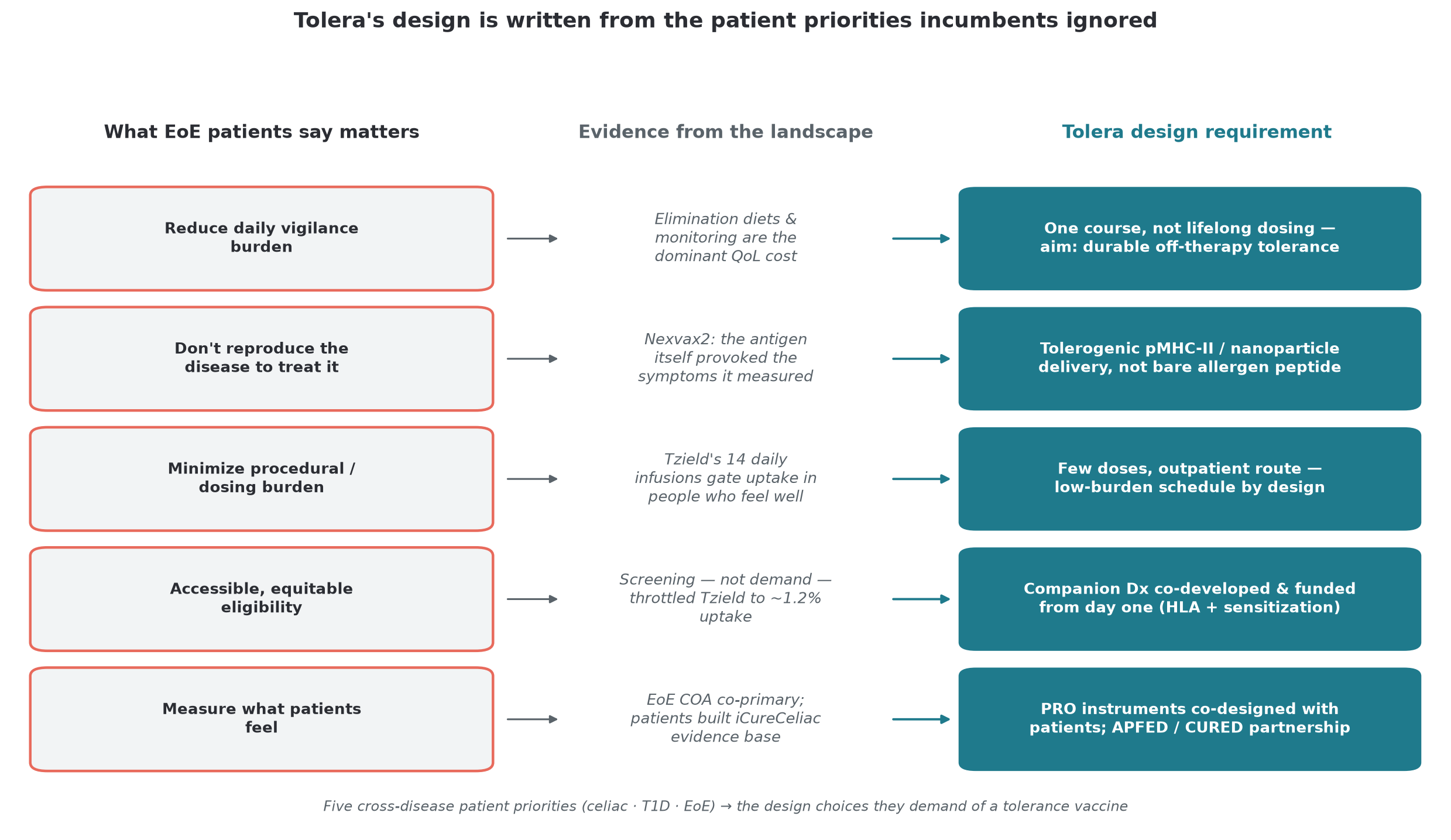
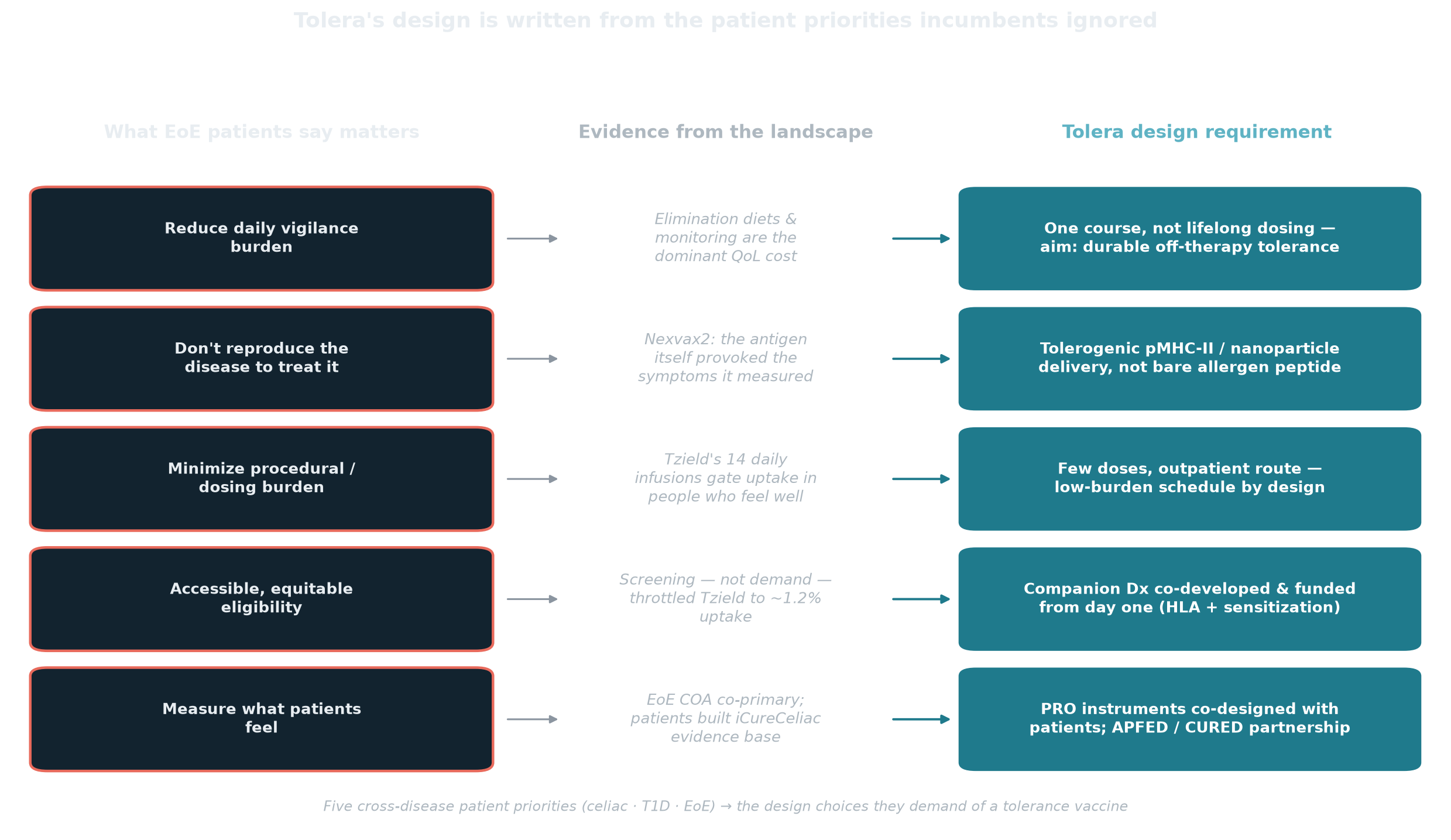
Antigen-specific tolerance is a hard, worthwhile problem, and the field has built the groundwork Tolera stands on. EoE has no dedicated patient-focused drug-development (PFDD) meeting and no pMHC program yet — an opening to bring patient priorities in early, capturing them before the trial is designed rather than after.
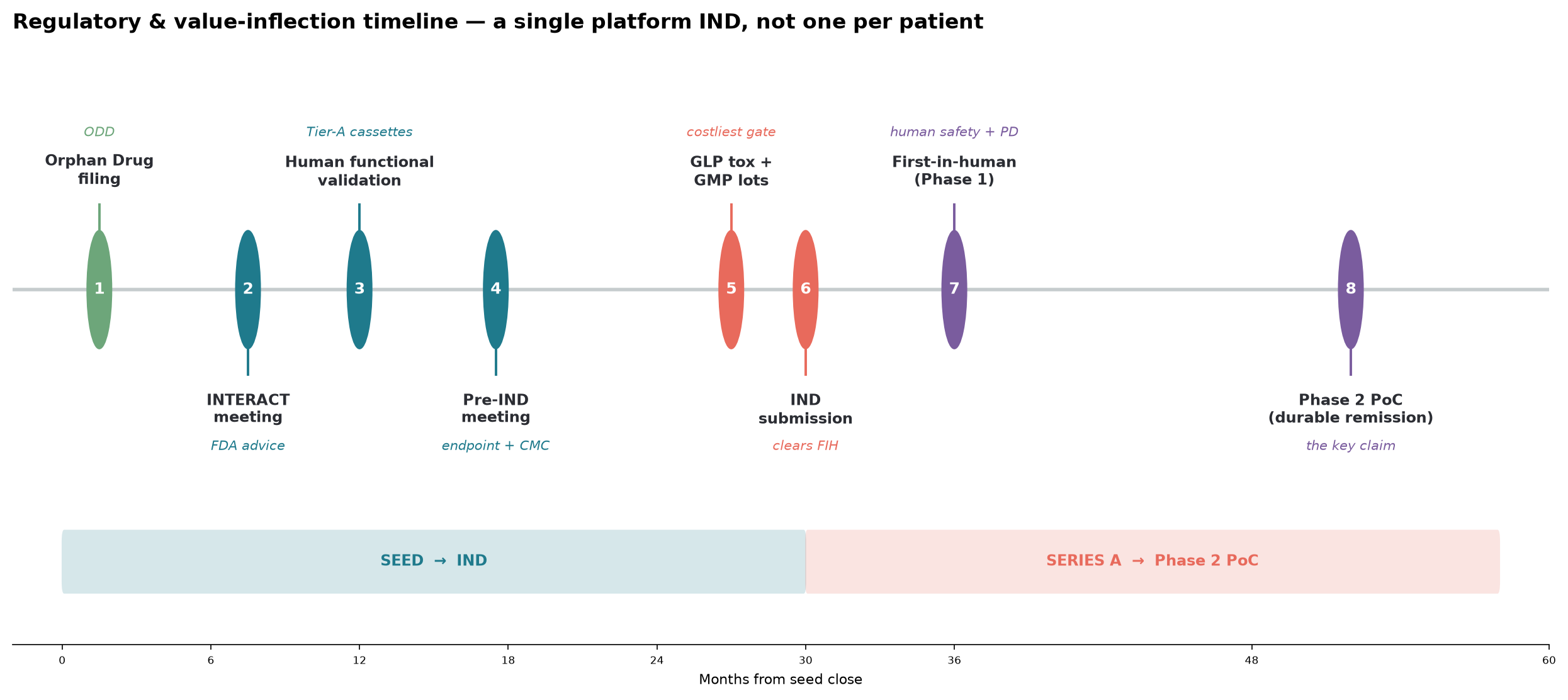
A platform IND, not one per patient
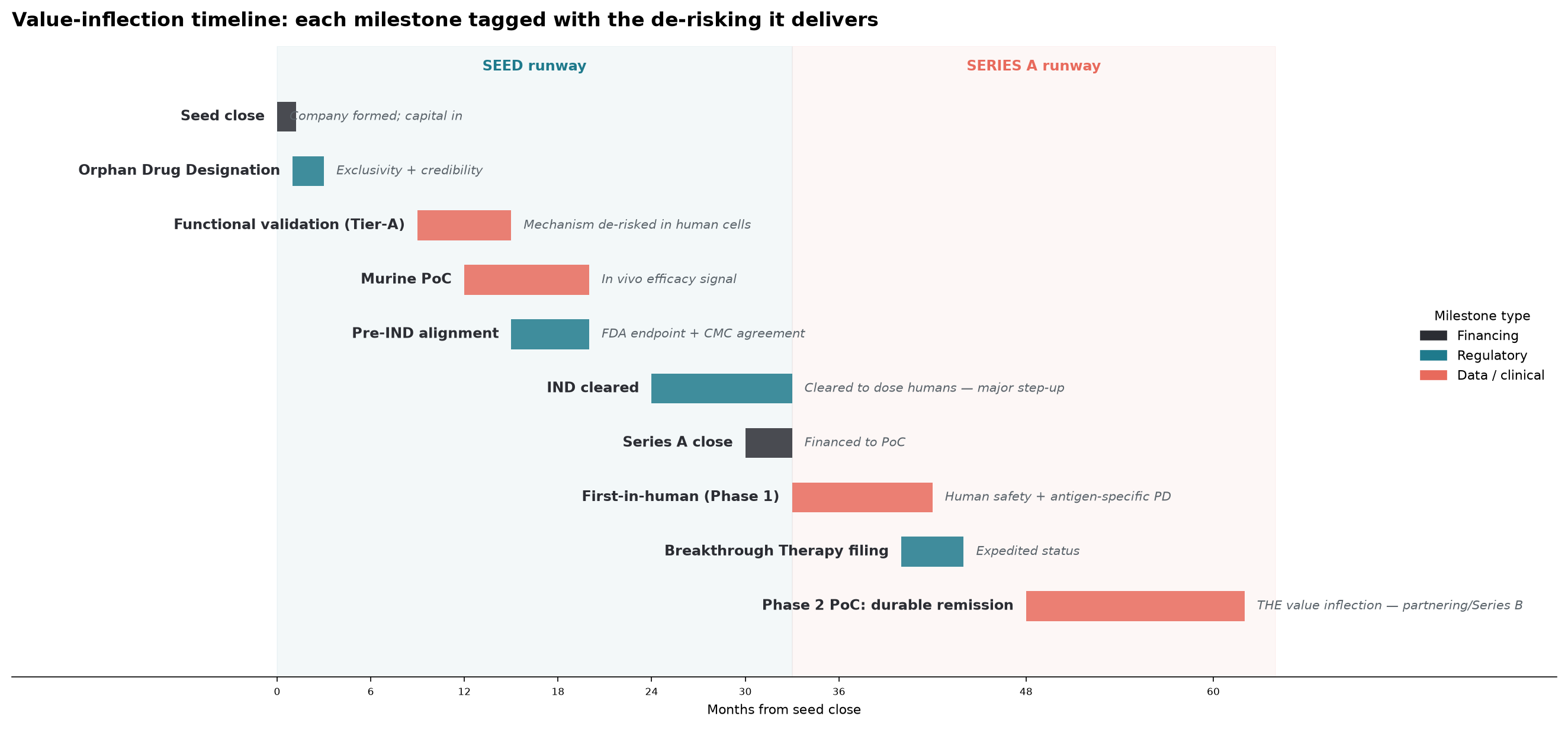
An EoE pMHC vaccine follows the trail blazed by Tzield (T1D), KAN-101 (celiac), and dupilumab (EoE). The plan pursues an expedited-designation sequence and engages FDA early on whether histologic remission can serve as a registration-enabling surrogate.
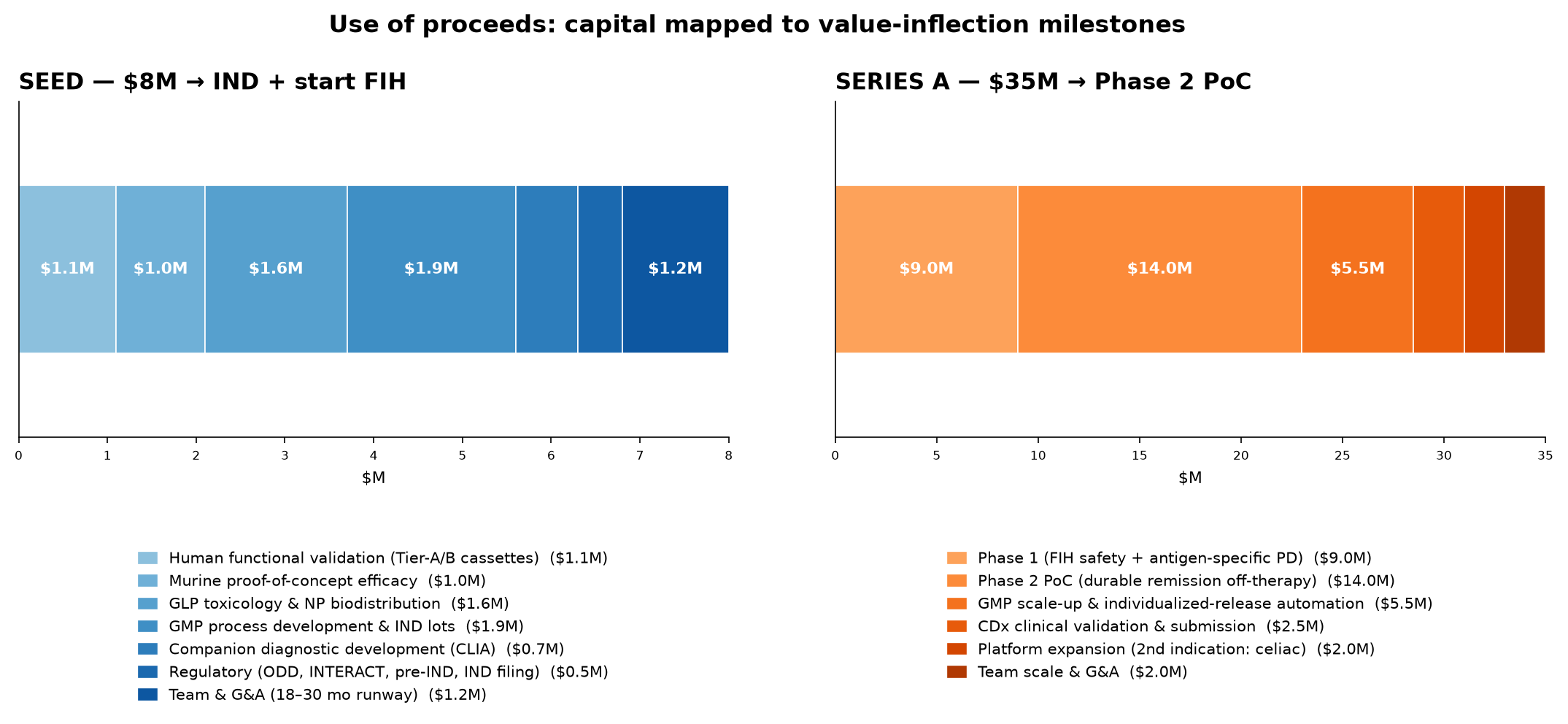
Capital mapped to value inflections
~$8M carries the concept from validated in-silico design to a cleared IND and first-in-human dosing — the single largest de-risking step available today. A further ~$35M funds through the Phase 2 durable-remission proof-of-concept. These figures scope the work, not a raise.
Documents
The complete Project Tolera package — business plan, scientific plan, financial model, market analysis, and investor deck. Everything below is downloadable.